
Wild garlic – herald of spring (March to May)
Wild garlic in the kitchen
When the first leaves of wild garlic emerge, spring is definitely on the way. Depending on the weather, it can be picked between the beginning of March and mid-May. After sprouting, wild garlic is only harvested for about two weeks. As soon as it flowers, it loses its distinct aroma and chefs are no longer interested in it.
The wild garlic leaves in particular are used as a fresh vegetable or processed into spice even though the whole plant is edible. The taste of wild garlic is similar to that of garlic but does not leave a pungent smell after a meal. It tastes spicy and at the same time wonderfully fresh.
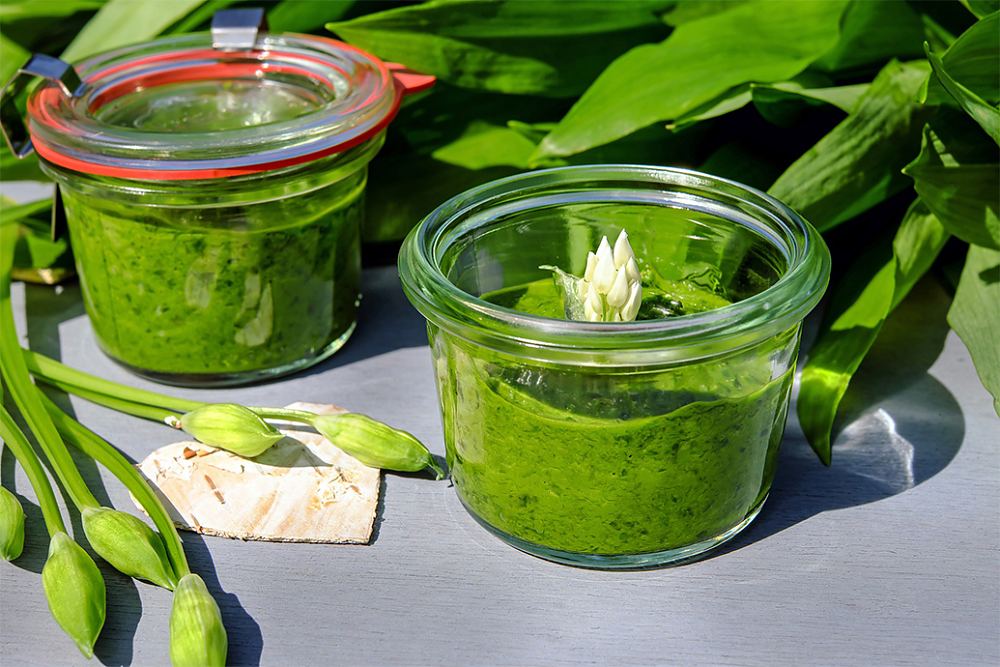
A classic wild garlic dish is wild garlic pesto – another good choice for freezing larger amounts to be used later. Wild garlic is also eminently suitable for making wild garlic butter or for flavouring soups. And wild garlic is also very healthy: it contains a lot of vitamin C, magnesium and iron and has a positive effect on digestion.
Be careful when picking wild garlic
When walking in the forest in spring and you think that you perceive a spicy garlic odour, you will probably find wild garlic nearby. But take care when picking it as wild garlic can be easily confused with lily of the valley and autumn crocus. Both are poisonous. Pick only when you are sure.
When crushing a leaf of wild garlic between your fingers, it smells of garlic. Make sure that your hands do not smell of garlic from previous testing. (If it does not smell of anything, do not pick it, is could be poisonous lilies of the valley or autumn crocuses).
Once you are sure that you have found wild garlic, pick just once leaf from each plant so that it can continue to grow well. Wash leafs thoroughly before eating to be sure that you do not ingest a fox tapeworm.
If all of that is too much of an issue, wild garlic is often also sold at farmer’s markets or in specialist supermarkets.