
Game dishes (September to November)
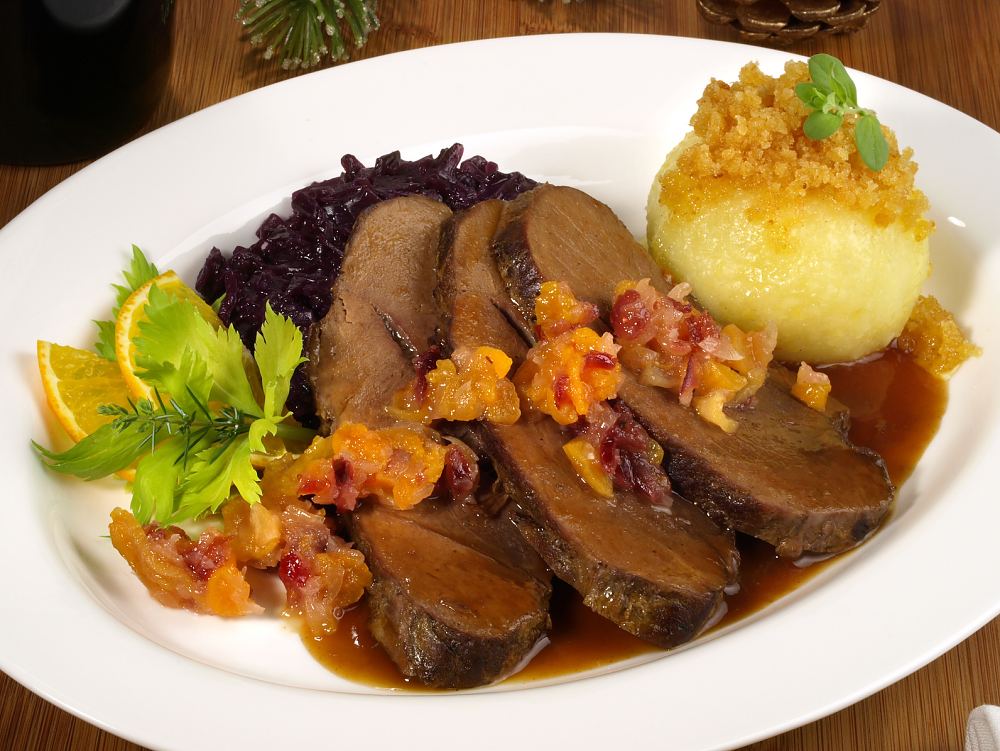
Days are slowly getting shorter and cooler, autumn is in the air. Many gourmets can hardly wait to see the new menus: after light summer meals, now there are the classic autumn dishes– saddle of venison, venison stew, ragout of hare and wild boar roast.
The typical autumn side dishes that usually accompany game are just as popular as the unique taste of the game itself: caramelised chestnuts, red cabbage, boiled pears with cranberries and, of course, spaetzli. Other autumnal-winter food such as quinces, apples, mushrooms, pumpkins, grapes and cranberries are also traditional side dishes served with game. The sweet note perfectly counterbalances the strong gamey taste.
Game is very wholesome and light, despite its strong taste. In contrast to beef and pork, the meat is fine-fibred, low in fat and cholesterol and thus highly digestible. More and more consumers are now asking for natural rearing and breed-specific husbandry and game complies with these requirements. It does not come as a surprise that game has become increasingly popular in recent years.
No game without hunting
In days of yore, the objective of hunting was to provide food and raw materials. Later on, in feudal times, it was a leisure activity. The main purpose of hunting today is to keep the wildlife population healthy and maintain flora and fauna. In Switzerland, hunting is governed by both national and cantonal laws. Hunters have to undergo a two-year’s training course before receiving a hunting licence.
Different hunting and closed seasons have been specified for the various species and regions of Switzerland. The hunting season starts in autumn in many Swiss Cantons – and accordingly, so does the game season in restaurants. Demand for game in particularly high from September to the beginning of November. A hunter usually kills just 2-3 edible game animals per season. This is one of the reasons why not all restaurants can offer locally hunted game.